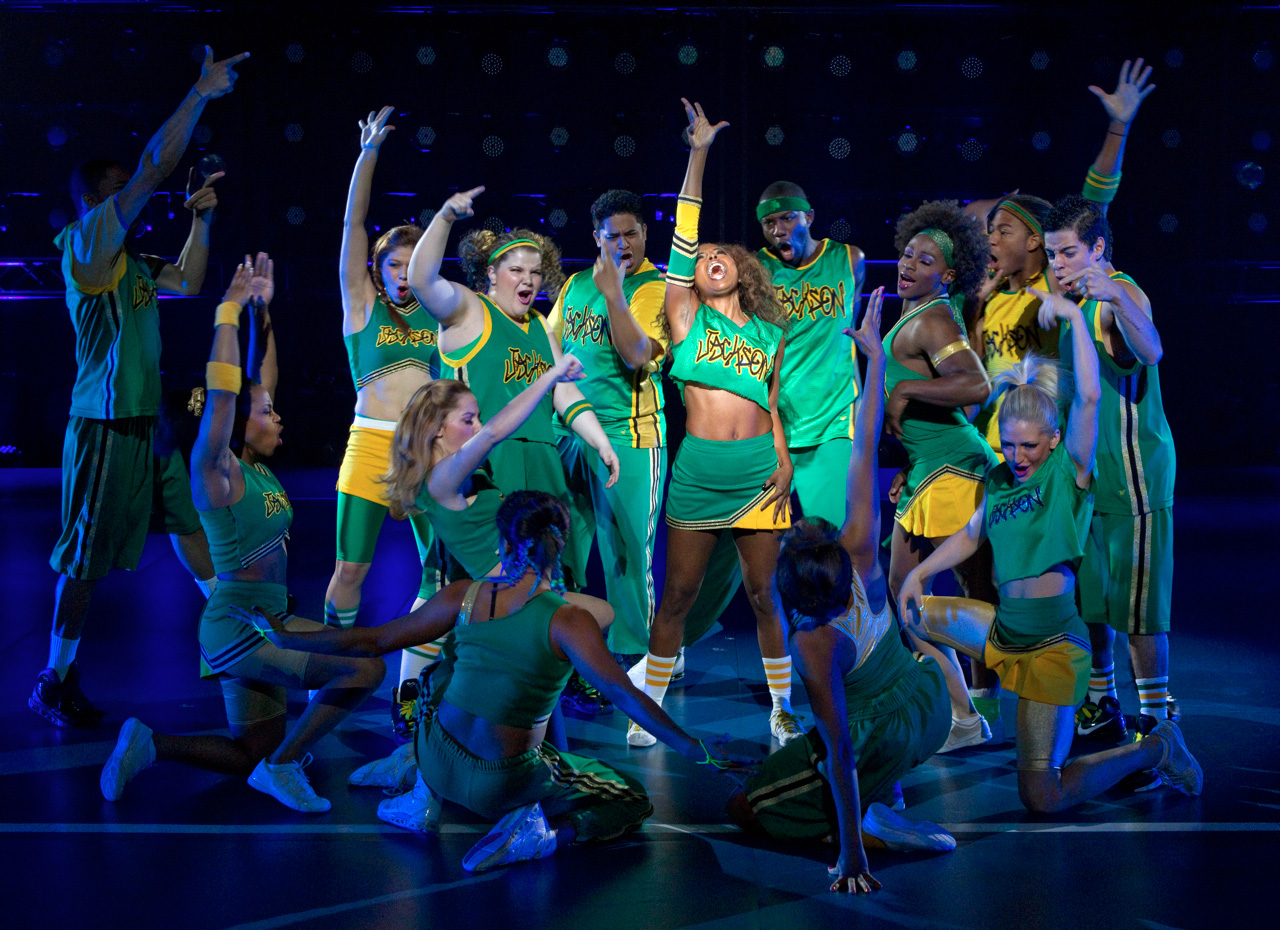
The team behind Bring It On: The Musical knows what you’re thinking: Splashy uniforms and spirit fingers aside, the production will be just another campy repurposing of a big-screen blockbuster. What you can’t predict, however, is the number of tricks it has hidden behind its pom-poms.
Jeff Whitty, the show’s writer (who won a Tony for Avenue Q), believes that if audiences approach this fall’s national tour of Bring It On: The Musical with a condescending eye roll, it won’t necessarily be to the show’s detriment. “I love low expectations,” he says. “I think it’s an advantage if people come thinking it will be stupid, fluffy fun. It’s better that they be surprised by how much texture and heart there really is.”
Preserving only the cheeky essence of the first movie and its quartet of sequels, Whitty wrote an original story for Bring It On that follows two high-school squads competing for a national title: Truman, uppity and whitewashed, and Jackson, a multicultural potpourri. Jackson is Whitty’s teenage utopia, where a transgender cheerleader, La Cienega, embodies the “be yourself” mantra.
“She’s the ringleader for loving yourself,” says Gregory Haney (second from left), who plays the self-assured transitioning teen. And while La Cienega has a boisterous energy that has won audience members over in past productions in Atlanta, many of them would never know she’s trans. Her status, gender, and sexuality are mentioned nowhere in Whitty’s book.
“We didn’t want La Cienega to be a social lesson,” says director Andy Blankenbuehler (In the Heights). “There’s a strength to that character because she’s warm and colorful and comfortable in her own skin, but we let people take what they want from her presence.”
For Whitty, keeping La Ceinega’s status ambiguous removes the line in the sand between some theatergoers’ misconceptions about the trans community and their ability to simply embrace her as an endearing, three-dimensional character. “Gregory owns that character in my heart because he brings the quality of If you have a problem with me, it’s your problem, not mine,” says Whitty. “It’s a very natural performance—like a friend talking—instead of a heightened display of femininity.” In fact, the role was inspired by many of Whitty’s own trans friends—including iconic downtown New York City chanteuse Justin Bond— who’ve channeled their confidence and courage into redefining gender.
“I’m a muscular guy, but when I become La Cienega, I become very feminine,” Haney says. “I get dressed, I put on my face, I make sure I’m fly, and then I go. It has nothing to do with whether or not I still have a unit.”
Out Magazine September 2011 >>> See the story online
 Phillip B. Crook
You must be logged in to post a comment.